
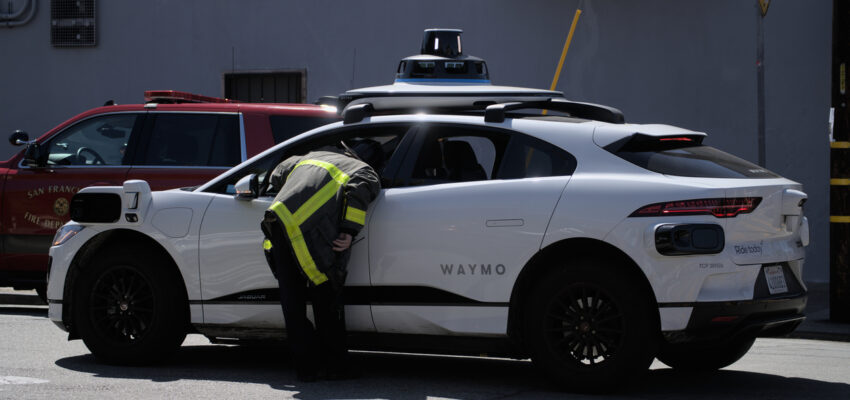
What causes Waymo accidents in Texas usually traces back to one of four things. The first is another road user’s conduct. The second is a limit in what the automated driving system could see or predict. The third is a road situation the system was not built to handle. The fourth is a part or maintenance failure on the vehicle. Under Section 545.454 of the Texas Transportation Code, the system itself is the operator while it is engaged. Texas also sets conditions the vehicle must meet first.
The Risk Categories Behind Automated Vehicle Crashes
Automated vehicle crashes fall into four groups:
- Another road user’s conduct: Texas splits shared blame by percentage of fault under Section 33.001 of the Texas Civil Practice and Remedies Code.
- A perception or prediction limit: Under Section 545.455 of the Texas Transportation Code, the vehicle must be able to reach a minimal risk condition when the system fails.
- A scenario the system was not built for: The same section also requires the vehicle to comply with Texas traffic laws.
- A mechanical or maintenance failure: A driverless car still has tires, brakes, and service intervals.
Who Gets the Ticket When a Driverless Car Breaks a Traffic Law in Texas?
A citation for a traffic or motor vehicle violation goes to the vehicle’s owner, or to whoever holds the vehicle’s state operating authorization. Texas does not require a driver’s license while the system is engaged, so “nobody was driving” is not a gap in the law. If a state operating authorization covers the vehicle, the holder also gets a unique operating number. That comes from Section 545.456 of the Texas Transportation Code. Who pays for an injury is a separate question, taken up in how Texas sorts out fault in autonomous rideshare crashes.
What Texas Requires of Every Automated Vehicle on the Road
Texas law sets six conditions for an automated vehicle. It must meet all six before it can run on a Texas street with its system engaged:
- It follows Texas traffic and motor vehicle laws
- It carries a recording device installed by the manufacturer
- It follows federal law, including federal safety standards
- It can reach a minimal risk condition if the system fails
- It is registered and titled in Texas
- It carries the required liability coverage or self-insurance
The recording device matters most to an injured person, since a compliant vehicle is required to carry one covering every trip. That device can be requested as evidence. Commercial driverless service needs two more things. One is a state operating authorization. The other is a filed plan that shows emergency responders how to reach a fleet support specialist, how to tow the vehicle safely, and how to see whether the system is engaged. Running without both is a Class B misdemeanor, and each day of operation is a separate offense.
Why Does It Matter Whether the System Reached a Minimal Risk Condition?
It matters because Texas will not let the vehicle on the road without it. A vehicle may not run with its system engaged unless it can reach a minimal risk condition. It has to be able to do that when a failure stops it from handling the driving task it was built for. The statute calls this the vehicle’s “dynamic driving task relevant to its intended operational design domain,” legal language for the specific driving conditions the system was designed to handle. Whether the vehicle actually reached a safe stop after a failure is the fact question Texas law puts on the table.
Can You Recover Damages if You Were Partly at Fault?
Yes. You can recover damages as long as your share of the responsibility is not greater than 50%. The statute bars recovery only above that share. In these car crashes, the percentage question is usually live. Another road user’s conduct and a system limit often combine.
How Long You Have to File a Claim After a Driverless Car Crash in Texas
Section 16.003 of the Texas Civil Practice and Remedies Code gives you two years to sue for a personal injury. The clock starts on the day the cause of action accrues. If the injury caused a death, you also have two years, starting the day the injured person died. The same section also points to narrow exceptions without listing them.
What Causes Waymo Accidents? Getting Answers After a Driverless Car Crash
After a crash involving an automated vehicle, two things come first: preserve what the vehicle recorded, and find out who owns it or holds its state operating authorization. Texas law directs the citation and the paperwork at those parties.
Contact Our Texas Personal Injury Law Firm For Help Today
If you’ve been injured in an accident in Texas and need legal help, contact our experienced personal injury lawyers at the Law Office of Shane McClelland PLLC to schedule a free consultation today.
We have two convenient locations in Texas, including Katy and Sugar Land. We proudly serve Rosenberg, Fort Bend County, Harris County, Waller County, and surrounding areas.
Law Office of Shane McClelland PLLC – Katy Office
Address: 21733 Provincial Blvd Suite 910, Katy, TX 77450
Phone: (713) 987-7107
Hours: 24/7
Our firm is located near you. Find us with our GeoCoordinates: 29.7787076,-95.748153,3574
Law Office of Shane McClelland PLLC – Sugar Land Office (By Appointment Only)
Address: 18722 University Blvd suite 243, Sugar Land, TX 77479
Phone: (832) 391-5219
Hours: 24/7
Find us with our GeoCoordinates: 29.5472032,-95.5861976,3583