


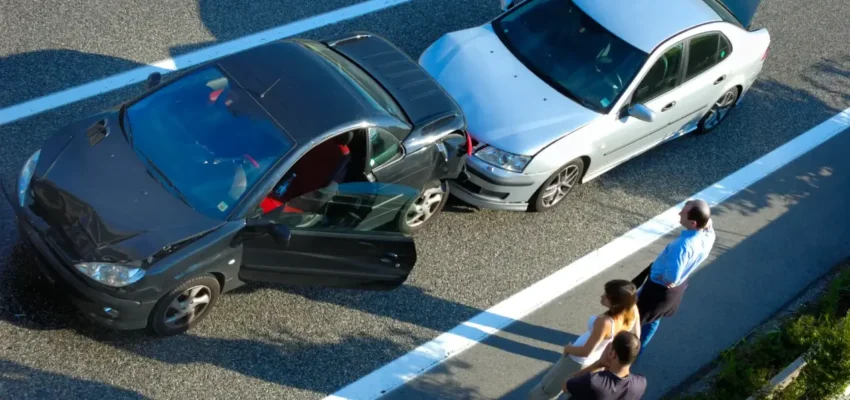
Who is liable for a Waymo accident in Texas usually comes down to one of three parties: the vehicle’s manufacturer, the company that runs the driverless fleet, or another driver in the crash. No single “self-driving car law” picks the right one. Ordinary negligence rules and product-liability rules (claims that a product itself was unsafe) decide instead. A robotaxi accident in Texas can even turn into a Waymo accident lawsuit against more than one of these parties at once.
How Does Texas Law Define Who Is “Operating” a Self-Driving Car?
Under Section 545.454 of the Texas Transportation Code, the self-driving system itself counts as the vehicle’s legal “operator” while it runs. That label decides who gets a traffic ticket (formally called a citation), not who pays for an injured person’s losses. The statute sends any citation to the vehicle’s owner, or to its state permit holder. It never goes to a passenger inside. That rule answers one narrow question: who ran the car for traffic-law purposes. Negligence and product-liability rules, covered next, answer the separate question of who owes money to someone hurt in the crash.
Safety and Insurance Rules a Driverless Car Must Follow in Texas
Texas law requires every automated vehicle on a public road to carry liability insurance, the same coverage any other driver must carry. Section 545.455 of the Texas Transportation Code lists six rules a vehicle must meet before it can drive itself on Texas roads:
- Follow Texas traffic law.
- Carry a recording device installed by the manufacturer.
- Run a self-driving system that meets federal safety standards.
- Be able to reach a safe stop if the system fails.
- Be registered and titled in Texas.
- Carry liability insurance or self-insurance that meets state or federal minimums.
A vehicle that carries passengers or cargo for a fee, with no human driver, needs two more things: authorization from the Texas Department of Motor Vehicles under Section 545.456 of the Texas Transportation Code, and a plan on file with the Texas Department of Public Safety describing how emergency responders should interact with the vehicle. Texas autonomous vehicle law treats these as an add-on to the six rules above, not a replacement for them.
Who Can Be Sued When a Self-Driving Car’s Technology Causes a Crash?
When a Waymo or similar vehicle crashes because of a flaw in its software, Texas law lets an injured person sue the manufacturer for a design defect, a claim that the product itself was unsafe. This claim stands on its own, alongside any ordinary negligence claim against a human driver in the crash. Section 82.005 of the Texas Civil Practice and Remedies Code sets the test for a design-defect claim. The injured person must prove two things to win. First, a safer design existed. Second, the defect actually caused the injury. An autonomous vehicle accident claim like this does not depend on who the statute calls the operator. The operator label only decides traffic tickets. Negligence and design-defect rules decide who pays a judgment instead. A claim aimed only at the named “operator” can miss the manufacturer who actually caused the defect.
Does Your Own Fault Change What You Can Recover?
Yes, but only up to a point. Section 33.001 of the Texas Civil Practice and Remedies Code lets you recover damages as long as your share of the responsibility is 50% or less. Pass that line, and you recover nothing. In a Waymo or driverless vehicle case, this question often comes down to how much of the crash traces back to the vehicle’s technology versus another driver’s conduct.
How Long Do I Have to File a Claim After a Waymo or Driverless Vehicle Accident in Texas?
Texas gives you two years from the date of the crash to file a personal injury lawsuit over a Waymo or other driverless vehicle accident. The same deadline applies to any car accident claim in Texas. Under Section 16.003 of the Texas Civil Practice and Remedies Code, the two-year clock starts on the day of the crash. It does not wait for the day you decide to pursue a claim. Missing the deadline can bar the claim, meaning a court will refuse to hear it, no matter how strong the facts are. A driverless vehicle’s sensor data is time-sensitive evidence. Fleet operators can erase it on a routine schedule. Contacting a lawyer early helps save that record before it disappears. A Waymo accident lawsuit built on solid sensor data holds up better than one built on secondhand accounts.
What to Do After a Driverless Vehicle Accident
Four steps protect a driverless-vehicle injury claim in Texas:
- Photograph the scene, both vehicles, and any visible damage before anything is moved or repaired.
- Report the crash through the standard accident-report process, the same as any other collision.
- Avoid discussing fault with the driverless vehicle company’s claims team before you talk to an attorney. Early statements can hurt a later claim.
- Contact a personal injury attorney soon, before that window closes.
Contact Our Texas Personal Injury Law Firm For Help Today
If you’ve been injured in an accident in Texas and need legal help, contact our experienced personal injury lawyers at the Law Office of Shane McClelland PLLC to schedule a free consultation today.
We have two convenient locations in Texas, including Katy and Sugar Land. We proudly serve Rosenberg, Fort Bend County, Harris County, Waller County, and surrounding areas.
Law Office of Shane McClelland PLLC – Katy Office
Address: 21733 Provincial Blvd Suite 910, Katy, TX 77450
Phone: (713) 987-7107
Hours: 24/7
Our firm is located near you. Find us with our GeoCoordinates: 29.7787076,-95.748153,3574
Law Office of Shane McClelland PLLC – Sugar Land Office (By Appointment Only)
Address: 18722 University Blvd suite 243, Sugar Land, TX 77479
Phone: (832) 391-5219
Hours: 24/7
Find us with our GeoCoordinates: 29.5472032,-95.5861976,3583