


Self-Driving Car Accidents in Katy, TX
 Self-driving car accidents in Katy leave many victims facing an unusual question: who do you sue when no one was behind the wheel? An empty driver’s seat is not a dead end. When an automated driving system is switched on, Texas law treats the system as the vehicle’s operator. A traffic ticket then goes to the vehicle’s owner, or to the company holding its state authorization.
Our team at the Law Office of Shane McClelland handles car accident claims in and around Katy. Call our Katy office at (713) 597-4836 or reach out to our team for a free consultation.
Who Is Liable When a Self-Driving Car Causes a Crash in Katy?
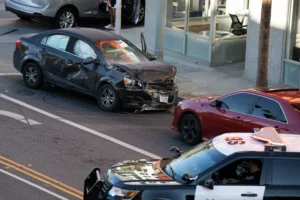 If the automated driving system was switched on when the crash happened, Texas law treats the system as the vehicle’s operator. Any traffic ticket goes to the vehicle’s owner. If the state had cleared the vehicle to run with no human driver, the ticket goes instead to the authorization holder.
Section 545.454 of the Texas Transportation Code also drops the need for a driver’s license. Often there is no human at-fault driver to name.
A claim can reach:
- The vehicle’s owner or fleet.
- The authorization holder, the company the state cleared to run driverless vehicles for money.
- The maker of the vehicle or its driving system.
- Another careless driver in the crash.
Naming the authorization holder is not a guess, and can be answered with records. Our Katy car accident team chases it early. If the vehicle was carrying paying riders, see our writing on liability in autonomous rideshare crashes.
What Texas Law Requires of Every Automated Vehicle
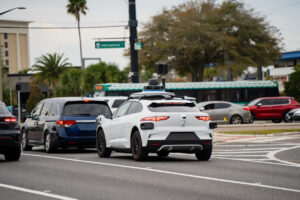
Texas lets automated vehicles drive on its streets, but a driverless vehicle running as a business is only legal on the road if two things are true:
- Its operator holds an authorization from the Texas Department of Motor Vehicles.
- The vehicle meets a set list of conditions.
Section 545.455 of the Texas Transportation Code lists the conditions:
- Compliance with Texas traffic laws
- A manufacturer-installed recording device
- A driving system that meets federal safety standards
- A minimal risk condition, or safe stop, on system failure
- Texas registration and title
- Liability insurance or self-insurance: coverage at the level Texas requires
Operating without that authorization or the required first-responder plan is a Class B misdemeanor, and each day of operation counts as a separate offense. A missing authorization or first-responder plan is a fact worth proving in your claim.
Under Section 545.451 of the Texas Transportation Code, the term “automated motor vehicle” reaches Level 4 and Level 5 vehicles, the ones capable of running with no human driver at all. A crash caused by a lower-level driver-assistance feature, like adaptive cruise control or lane-keep assist, is an ordinary negligence case against the human driver instead.
Suing the Driver, the Carmaker, or Both
You may be suing both at once. A self-driving crash claim usually runs on two tracks. One is a negligence claim about how the vehicle was operated, supervised, or maintained. The other is a product liability claim about the automated driving system itself.
| Track | Defendant | What you must show |
| Negligence | Whoever put the vehicle on the road in that condition, or another driver involved | Conduct below reasonable care that caused the crash, answering the “nobody was driving” defense |
| Product liability (the product was defective) | The maker of the vehicle or its driving system | A design defect that caused the injury |
Under Section 82.005 of the Texas Civil Practice and Remedies Code, you must prove a safer alternative design. The design must have prevented the injury or made it much less serious.
The design also must not take away much of what the product is good for. It must have been affordable and possible to build when the product left the maker’s hands. Additionally, the defect must have been a producing cause, meaning it helped bring the injury about.
Where a defective vehicle or vehicle component caused the crash, both tracks can run together.
Compensation Available After a Self-Driving Car Crash
A self-driving car crash claim in Texas covers the same damages as any serious motor vehicle claim. You can seek the cost of medical care you have had and still need.
You can also seek lost income and lost earning capacity, the future pay the injury takes away. Property damage, physical pain, mental anguish, and physical impairment count too. Our personal injury claims handle all of these damages.
Where a crash kills someone, Section 16.003 of the Texas Civil Practice and Remedies Code gives the family two years from the date of death.
Does Texas Reduce What I Recover if I Was Partly at Fault?
Yes. Beyond a certain extent of fault, being partially responsible removes your recovery altogether.
Section 33.001 of the Texas Civil Practice and Remedies Code draws the line. If your share of responsibility is more than 50%, you recover nothing.
Below that line, your share of fault still moves what the claim is worth. The defense works to shift fault onto the human in the car.
How Long You Have to File a Self-Driving Car Accident Claim in Texas
In Texas, you generally have two years to file a personal injury lawsuit. That clock starts on the day the claim accrues, ordinarily the date of the crash itself, since that’s usually when the injury first becomes apparent.
That two-year window carries its own exceptions, so the deadline on any one crash is a lawyer’s question. The deadline is also the outer limit, not a target to plan around. Evidence usually disappears well before then.
The Evidence That Disappears First After a Driverless Crash
The vehicle’s own recording device is the first thing to secure. Texas requires a driverless vehicle running as a business to carry a recording device from the maker. The data sits with the company that operates the vehicle, not with you.
Three records matter first:
- The recording device data itself.
- The state authorization the operating company had to hold. It names the company that answers for the vehicle.
- The first-responder plan filed with the Texas Department of Public Safety. It shows how to reach a fleet support specialist and confirm the system was switched on.
The state authorization comes from Section 545.456 of the Texas Transportation Code, which also assigns a unique operating number; the holder must update the department within 30 days of any material change to that filing. None of the three records sit in your hands by default.
Get Help With Self-Driving Car Accidents in Katy
If you or a family member were hurt in a crash like this, we at the Law Office of Shane McClelland can name who Texas law puts on the hook. We can also move to save the vehicle and authorization records before they are gone. Hold on to two things: the two-year deadline and the name of the company whose vehicle it was.
If you’ve been hurt in a car accident involving a self-driving vehicle in Katy, call our office at (713) 597-4836 or get in touch with our team about self-driving car accidents in Katy.




© Copyright 2026 Law Office of Shane McClelland, PLLC • All Rights Reserved.
