

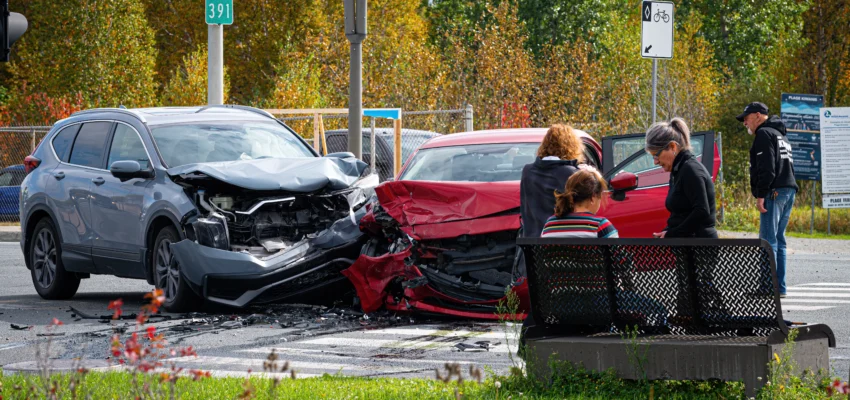
If you were hurt in a crash involving an Uber or Lyft, your claim works differently from a standard car accident case. The basics of proving fault are the same, but who pays, how much coverage is available, and who can be held responsible all depend on factors that simply do not exist in a typical two-car collision. Knowing those differences early can prevent costly mistakes.
Fault Works the Same. Insurance Does Not.
In any Texas car accident case, you must show that another party’s negligence caused your injuries. That part does not change whether you were in a rideshare. What changes significantly is the insurance picture.
In a standard car accident, you are generally dealing with one driver’s personal auto policy. In a rideshare accident, the applicable coverage depends entirely on what the driver was doing at the moment of impact. Texas law and the policies maintained by rideshare companies divide a driver’s activity into distinct phases, each with a different level of coverage.
The Three Phases That Control Your Claim
Under Texas Insurance Code § 1954.051, Transportation Network Companies (TNCs) like Uber and Lyft must maintain specific insurance coverage tied to what their drivers are doing at any given time. The phase your driver was in when the crash happened shapes everything about your claim.
The three phases are:
- Phase 1: The app is off, and the driver is operating as a private individual. Only their personal auto insurance applies, with no involvement from Uber or Lyft, so the claim works exactly like a standard car accident.
- Phase 2: The app is on, but the driver has not yet accepted a ride request. The TNC provides contingent liability coverage of $50,000 per person, $100,000 per accident, and $25,000 in property damage, but only if the driver’s personal policy does not apply first.
- Phase 3: The driver has accepted a trip and is either en route to pick up a passenger or actively transporting one. TNC coverage increases significantly during this phase, with Uber and Lyft both maintaining $1,000,000 in third-party liability coverage.
If you were a passenger in the rideshare, you were almost certainly in Phase 3 when the crash happened, which means the full $1,000,000 policy is in play. If you were in another vehicle hit by a rideshare driver, the phase determination is one of the first things our attorneys will need to establish.
Multiple Parties Can Be Responsible
In a standard car accident, you typically have one at-fault driver and one insurance policy to work with. Rideshare accidents can involve multiple layers of potential liability, creating both greater complexity and, sometimes, additional sources of compensation.
Parties that may share responsibility in a rideshare accident include:
- The rideshare driver, for negligent driving
- Uber or Lyft, depending on the circumstances and the driver’s phase at the time
- Another driver whose negligence contributed to the crash
- A vehicle manufacturer, if a defect played a role
- A government entity, if poor road conditions or signal failures were a factor
Identifying all potentially liable parties matters because it affects what your total recovery could look like. Settling too quickly with one party before the others are identified can leave significant compensation on the table.
One of the most significant legal distinctions in rideshare cases is how companies like Uber and Lyft classify their drivers. They are not employees; they are independent contractors. This classification is intentional and is used to limit the company’s exposure when a driver causes an accident.
That said, the statutory insurance requirements under Texas Insurance Code Chapter 1954 still apply regardless of that classification. The phase-based coverage structure exists because the legislature recognized that these companies have some responsibility for what happens while their platform is active. The contractor classification does not eliminate TNC liability; it limits it in ways that make legal representation important.
The Statute of Limitations Is the Same
Whether your injury came from a rideshare crash or a standard collision, Texas gives you two years from the date of the accident to file a personal injury lawsuit under Texas Civil Practice and Remedies Code § 16.003. That deadline applies equally to claims against the driver, the TNC, and any other responsible party.
What is different in rideshare cases is how quickly evidence can become important. Uber and Lyft maintain their own records of when a driver’s app was active, when a trip was accepted, and when it ended. Those records directly determine which phase is applied and how much insurance coverage is available. Getting legal help early means those records can be requested before they are harder to obtain.
A few steps matter more in rideshare cases than in standard accidents:
- Screenshot the app immediately, including the trip details, driver information, and any receipts
- Request and save a copy of your trip confirmation from Uber or Lyft
- Get the police report, which will document whether the driver was on an active trip
- Seek medical attention the same day, even if you feel relatively okay
- Avoid accepting any early settlement before the full extent of your injuries is known
Rideshare injury cases involve insurance structures and legal questions that standard car accident claims do not. At the Law Office of Shane McClelland, our Katy and Sugar Land rideshare attorneys handle rideshare accident cases across the Houston area and know how to cut through the complexity to get our clients the compensation they deserve.
Call us at (713) 597-4836 or contact us online for a free consultation. There is no cost to speak with us and no obligation to move forward.