


Distracted Driving Accidents in Sugar Land, TX
 Distracted driving is one of the most common and preventable causes of serious car accidents in Texas. When a driver takes their eyes off the road, even for a few seconds, the consequences for everyone around them can be life-changing.
If you were hurt in a distracted driving crash in Sugar Land or the Fort Bend County area, you have the right to pursue compensation from the driver responsible. At the Law Office of Shane McClelland, we represent accident victims throughout Sugar Land and the greater Houston area. Call us at (832) 391-5219 or contact us online for a free consultation.
What Texas Law Says About Distracted Driving
 Texas passed a statewide ban on reading, writing, or sending electronic messages while driving under Texas Transportation Code § 545.4251. A driver who violates this law and causes an accident has already broken a legal duty to others on the road. That violation is relevant evidence in a personal injury claim.
Beyond cell phone use, distracted driving encompasses any behavior that diverts a driver’s attention from operating a vehicle safely. Texas follows a negligence standard in personal injury cases, meaning an injured victim must show that the other driver failed to exercise reasonable care and that the failure caused the accident and resulting injuries.
Common Types of Distracted Driving
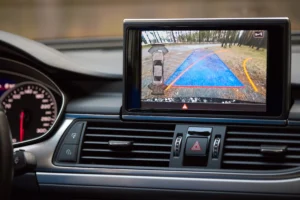 Distraction behind the wheel takes more forms than most people consider. While texting gets the most attention, other behaviors are just as dangerous and just as legally significant when they contribute to a crash.
Common forms of distracted driving include:
- Texting, scrolling, or using social media while driving
- Talking on a handheld phone
- Entering directions into a GPS or navigation app
- Eating or drinking while driving
- Adjusting the radio, climate controls, or other vehicle systems
- Reaching for objects in the back seat or on the floor
- Applying makeup or personal grooming
- Conversations with passengers that pull attention from the road
Any of these behaviors, when they contribute to a crash that injures someone else, can form the basis of a negligence claim.
Injuries Common in Distracted Driving Crashes
Distracted drivers often fail to brake, swerve, or react at all before impact, so these collisions frequently occur at full speed. The injuries that result tend to be serious and can affect victims for months or years after the accident.
Injuries commonly seen in distracted driving cases include:
- Traumatic brain injuries and concussions
- Whiplash and other cervical spine injuries
- Herniated or bulging discs
- Broken bones and fractures
- Shoulder, knee, and joint injuries
- Internal organ damage
- Lacerations and scarring
- Spinal cord injuries in severe crashes
Some of these injuries are not immediately obvious at the scene. Symptoms from brain injuries and soft tissue damage can take days to appear, which is one reason getting a medical evaluation right after the accident matters even when you feel relatively okay.
How to Build a Strong Distracted Driving Claim
Proving that a driver was distracted at the moment of impact requires evidence, and some of the best evidence disappears quickly. Cell phone records can show whether a driver was texting or using an app in the moments before the crash, but obtaining those records typically requires a legal request. Witness accounts, surveillance footage from nearby businesses, and dashcam video all become harder to access over time.
What you do in the hours and days after the accident can directly affect the strength of your claim. Steps that help protect your case include:
- Calling the police and getting an official accident report filed
- Taking photos at the scene, including vehicle positions, damage, and road conditions
- Getting contact information from any witnesses
- Seeking medical attention the same day, even if injuries seem minor
- Saving all records related to your medical treatment, lost work, and expenses
- Avoiding recorded statements to the other driver’s insurance company before speaking with an attorney
Insurance adjusters for the at-fault driver are not working to secure the best outcome for you. They are working to minimize what their company pays. Having legal representation levels the playing field.
Deadlines for Filing Your Claim in Texas
Texas gives injured victims two years from the date of the accident to file a personal injury lawsuit, and if a distracted driving crash caused a fatality, surviving family members generally have two years from the date of death to bring a wrongful death claim, both under Texas Civil Practice and Remedies Code § 16.003. Missing either deadline almost always ends the right to pursue compensation, so acting sooner rather than later is always the better choice.
Why the Law Office of Shane McClelland Handles These Cases
At the Law Office of Shane McClelland, our attorneys have built distracted-driving cases for clients throughout Fort Bend County and the greater Houston area. We know what evidence matters, how to obtain it quickly, and how to present a claim that holds the at-fault driver fully accountable.
Our clients describe what it is like to work with our firm in their own words. We take distracted driving cases on a contingency fee basis, which means you pay no attorney fees unless we recover compensation for you, though clients may still be responsible for certain litigation costs. If you are unsure whether you have a car accident case, a free consultation with our Sugar Land distracted driving lawyers gives you a clear picture of where you stand.
Frequently Asked Questions About Sugar Land Distracted Driving Cases
How Do You Prove the Other Driver Was Distracted?
Proof usually comes down to timing. A phone record showing activity in the seconds before impact, combined with a police report noting no skid marks or braking, paints a clear picture of a driver who never saw the crash coming. Our attorneys know how to request these records quickly, since carriers aren’t required to hold onto them indefinitely.
What If the Other Driver Denies Being Distracted?
Denial is common. That is why physical evidence matters more than the other driver’s account. Crash reconstruction, phone records, and witness testimony can establish distraction even when the at-fault driver refuses to admit it.
Does Comparative Fault Affect Your Claim?
Under Texas Civil Practice and Remedies Code § 33.001, Texas uses a modified comparative fault rule. If you are found partially at fault, your compensation is reduced by your percentage of responsibility. You can still recover as long as your share of fault does not exceed 50%.
What If the Distracted Driver Had Minimum Insurance Coverage?
If the at-fault driver’s policy limits are too low to cover your losses, your own underinsured motorist coverage may apply. Our firm reviews all available insurance sources to make sure nothing is overlooked.
Talk to Our Attorneys After a Distracted Driving Accident in Sugar Land
You should not be left covering medical bills and lost income because another driver was not paying attention. At the Law Office of Shane McClelland, we offer free consultations to distracted-driving accident victims in Sugar Land and across the Houston area. Call us at (832) 391-5219 or contact us online to get started. There is no cost to speak with our distracted-driving accident lawyers in Sugar Land, and no obligation to move forward.



© Copyright 2026 Law Office of Shane McClelland, PLLC • All Rights Reserved.
